cartcloseinfolockmenuplayplayplayplayadd to playlistremove from playlistplaylist
Current MHT shortages My Profile Resource Hub Find a Practitioner Become a Member
1 / 1 | % |
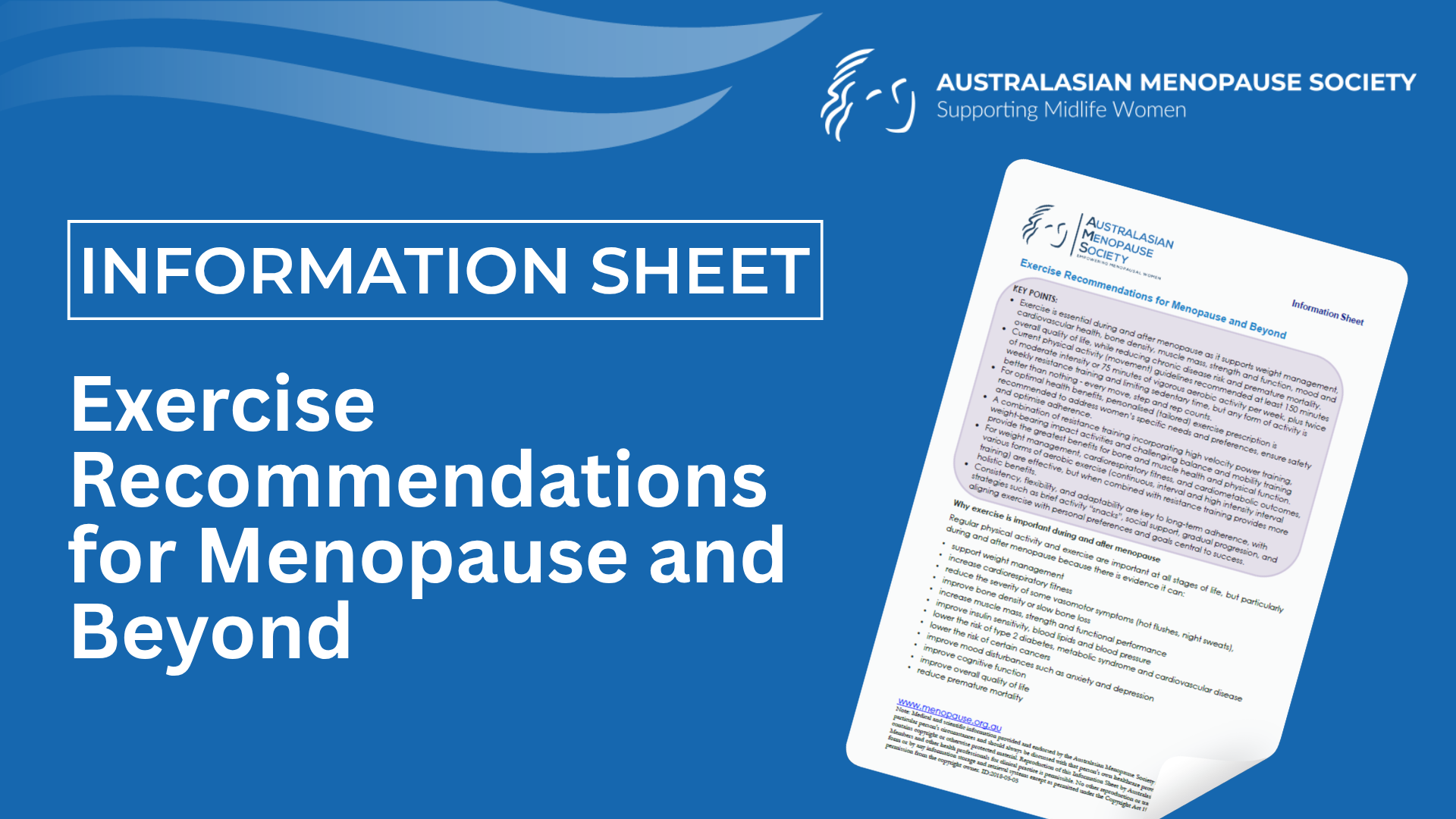
Exercise Recommendations for Menopause and Beyond

Access to this information sheet is reserved for members.  Log in to view or  Join Here for instant access to member-only resources.  


Key points

  • Exercise is essential during and after menopause as it supports weight management, cardiovascular health, bone density, muscle mass, strength and function, mood and overall quality of life, while reducing chronic disease risk and premature mortality.
  • Current physical activity (movement) guidelines recommended at least 150 minutes of moderate intensity or 75 minutes of vigorous aerobic activity per week, plus twice weekly resistance training and limiting sedentary time, but any form of activity is better than nothing - every move, step and rep counts.
  • For optimal health benefits, personalised (tailored) exercise prescription is recommended to address women’s specific needs and preferences, ensure safety and optimise adherence.
  • A combination of resistance training incorporating high velocity power training, weight-bearing impact activities and challenging balance and mobility training provide the greatest benefits for bone and muscle health and physical function.
  • For weight management, cardiorespiratory fitness, and cardiometabolic outcomes, various forms of aerobic exercise (continuous, interval and high intensity interval training) are effective, but when combined with resistance training provides more holistic benefits.
  • Consistency, flexibility, and adaptability are key to long-term adherence, with strategies such as brief activity “snacks”, social support, gradual progression, and aligning exercise with personal preferences and goals central to success.
Prof. Robin Daly, PhD FASMF FASBMR

Professor, Deakin University

Professor Robin Daly holds the position of the Chair in Exercise and Ageing and leads the Musculoskeletal Health and Mobility Research Group within the School of Exercise and Nutrition Sciences. He is also a member of the Institute for Physical Activity and Nutrition (IPAN). He completed his PhD in 1998 and was awarded a 3-year National Health and Medical Research Council (NHMRC Australia) early-career research fellowship in 2001 followed by a 5-year NHMRC Career Development Award in 2007. In 2006 he held an Osteoporosis Australia Research fellowship and from 2008-10, he was the Director of Research and Associate Professor in the Department of Medicine (Western Health) at the University of Melbourne. In 2011, he returned to Deakin University as a Professor and the Chair of Exercise and Ageing.