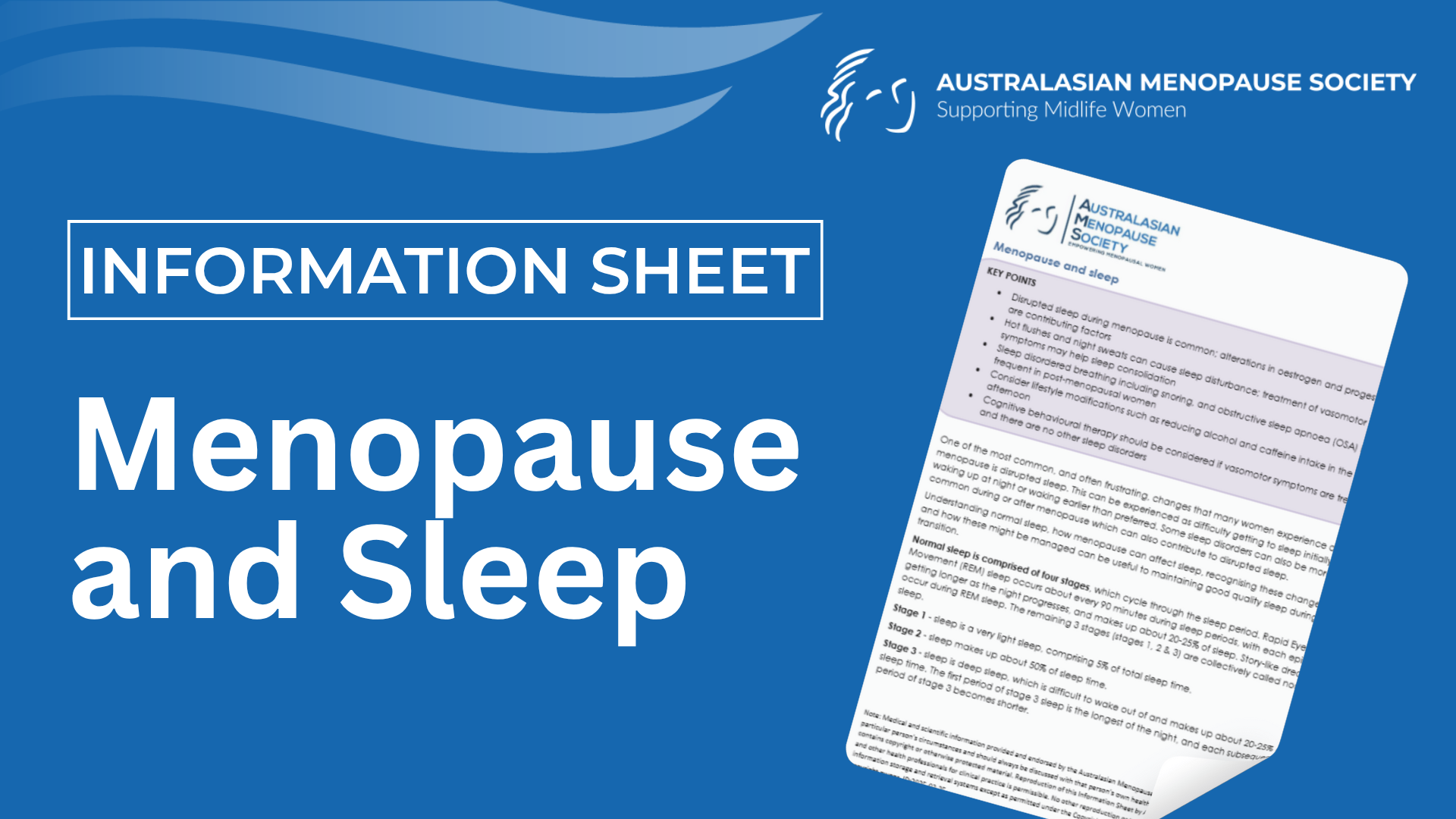
Menopause and Sleep
Access to this information sheet is reserved for members. Log in to view or Join Here for instant access to member-only resources.
Key points
|
One of the most common, and often frustrating, changes that many women experience during menopause is disrupted sleep. This can be experienced as difficulty getting to sleep initially, waking up at night or waking earlier than preferred. Some sleep disorders can also be more common during or after menopause which can also contribute to disrupted sleep. Understanding normal sleep, how menopause can affect sleep, recognising these changes, and how these might be managed can be useful to maintaining good quality sleep during this transition.
-- MENOPAUSE TOPICS
Alternative Therapies
Lifestyle Interventions
Risks and Benefits
Treatment Options
