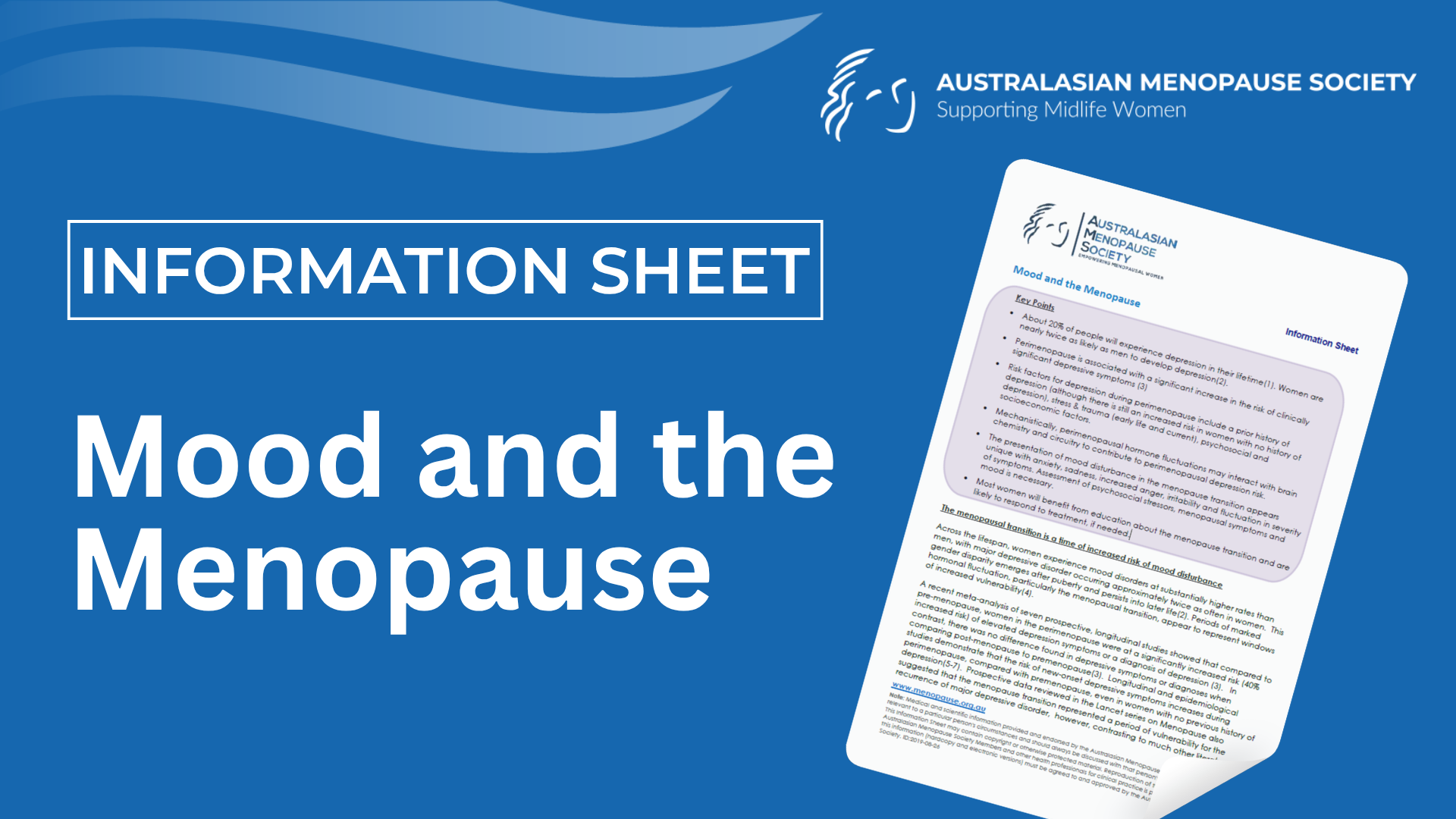
Mood and the Menopause
Access to this information sheet is reserved for members. Log in to view or Join Here for instant access to member-only resources.
Key points
|

Caroline is an Associate Professor and a clinical neuropsychologist. She is the Deputy Director of the HER Centre Australia, Monash University, and Head of the “Cognition and Hormones Group". Caroline has a research interest in the neuropsychology of women's mental health, particularly in understanding how hormones influence cognitive functioning. Caroline's research combines neuropsychological assessments with eye movement research to clearly characterise cognition. Caroline has over 120 publications that have ultimately contributed to a better understanding of how biological factors influence symptoms and cognition in mental health and mental illness. She is the recipient of several awards, prizes and competitive grant funding, including NHMRC project grants, an NHMRC early career fellowship, Rebecca Cooper Foundation project grant as well as institutional and philanthropic funding. She is a dedicated supervisor to PhD candidates, honours students, neuropsychology registrars and medical student placements. Caroline has established ongoing biodatabanks to better understand biological mechanisms underpinning symptoms across a range of neuropsychiatric disorders.
