cartcloseinfolockmenuplayplayplayplayadd to playlistremove from playlistplaylist
Current MHT shortages My Profile Resource Hub Find a Practitioner Become a Member
1 / 1 | % |
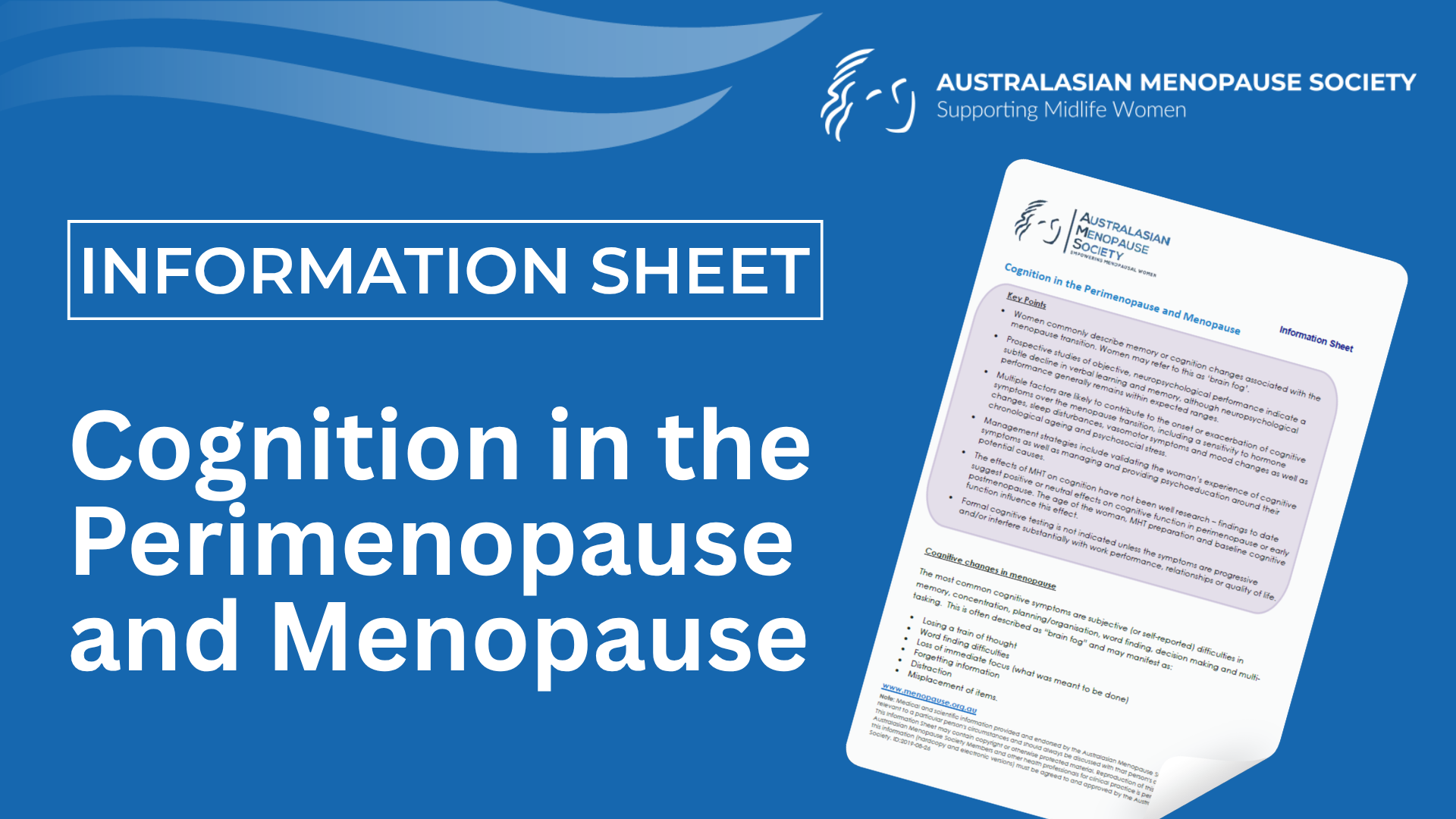
Cognition in the Perimenopause and Menopause

Access to this information sheet is reserved for members.  Log in to view or  Join Here for instant access to member-only resources.  


Key points

  • Women commonly describe memory or cognition changes associated with the menopause transition. Women may refer to this as ‘brain fog’.
  • Prospective studies of objective, neuropsychological performance indicate a subtle decline in verbal learning and memory, although neuropsychological performance generally remains within expected ranges.
  • Multiple factors are likely to contribute to the onset or exacerbation of cognitive symptoms over the menopause transition, including a sensitivity to hormone changes, sleep disturbances, vasomotor symptoms and mood changes as well as chronological ageing and psychosocial stress.
  • Management strategies include validating the woman’s experience of cognitive symptoms as well as managing and providing psychoeducation around their potential causes.
  • The effects of MHT on cognition have not been well research – findings to date suggest positive or neutral effects on cognitive function in perimenopause or early postmenopause. The age of the woman, MHT preparation and baseline cognitive function influence this effect.
  • Formal cognitive testing is not indicated unless the symptoms are progressive and/or interfere substantially with work performance, relationships or quality of life.
Caroline Gurvich

Caroline is an Associate Professor and a clinical neuropsychologist. She is the Deputy Director of the HER Centre Australia, Monash University, and Head of the “Cognition and Hormones Group". Caroline has a research interest in the neuropsychology of women's mental health, particularly in understanding how hormones influence cognitive functioning. Caroline's research combines neuropsychological assessments with eye movement research to clearly characterise cognition. Caroline has over 120 publications that have ultimately contributed to a better understanding of how biological factors influence symptoms and cognition in mental health and mental illness. She is the recipient of several awards, prizes and competitive grant funding, including NHMRC project grants, an NHMRC early career fellowship, Rebecca Cooper Foundation project grant as well as institutional and philanthropic funding. She is a dedicated supervisor to PhD candidates, honours students, neuropsychology registrars and medical student placements. Caroline has established ongoing biodatabanks to better understand biological mechanisms underpinning symptoms across a range of neuropsychiatric disorders.