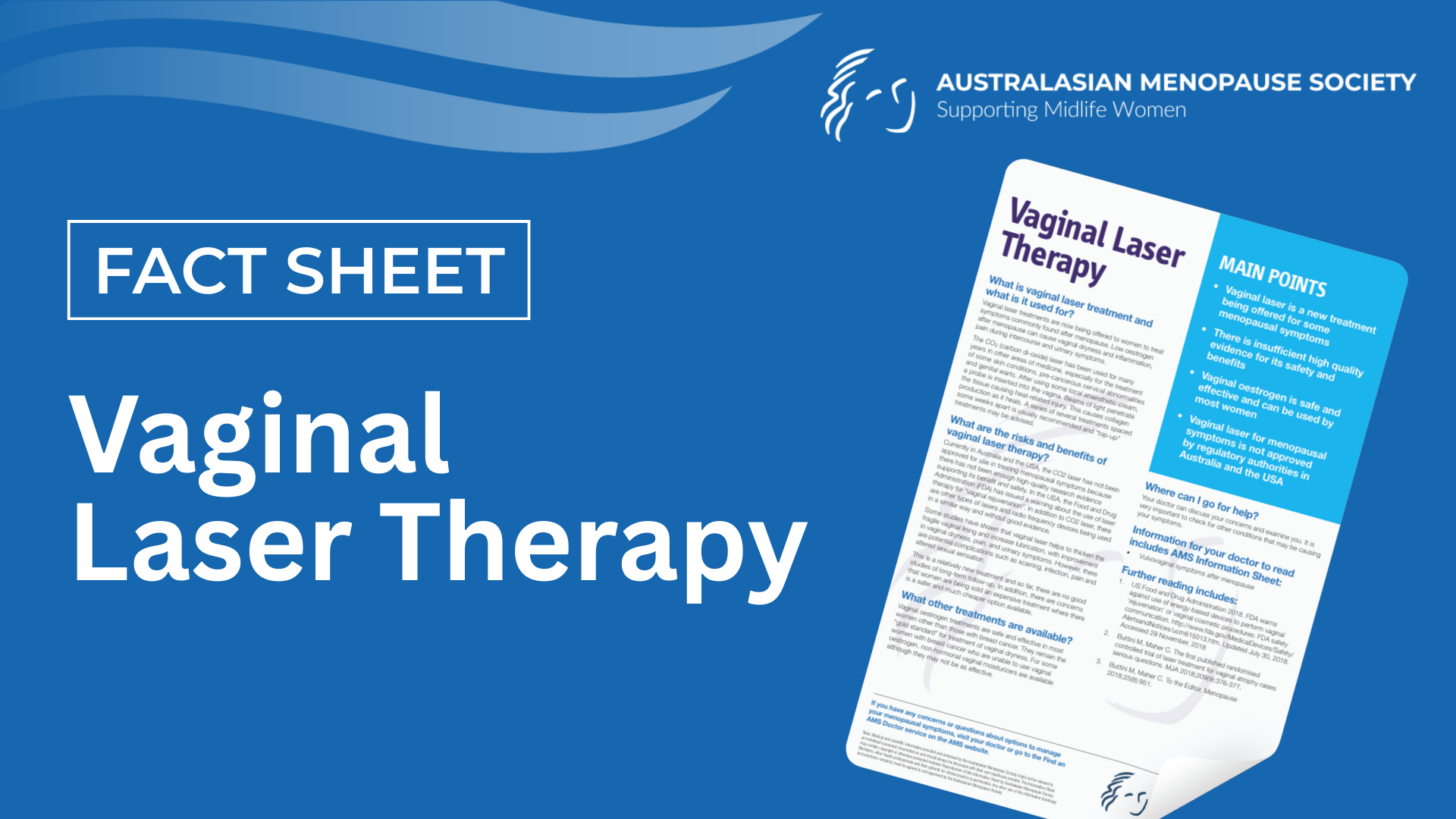
Vaginal Laser Therapy | Fact Sheet
 Download: Vaginal Laser Therapy | Fact Sheet
MAIN POINTS
- Vaginal laser is a new treatment being offered for some menopausal symptoms
- There is insufficient high quality evidence for its safety and benefits
- Vaginal oestrogen is safe and effective and can be used by most women
- Vaginal laser for menopausal symptoms is not approved by regulatory authorities in Australia and the USA
What is vaginal laser treatment and what is it used for?
Vaginal laser treatments are now being offered to women to treat symptoms commonly found after menopause. Low oestrogen after menopause can cause vaginal dryness and inflammation, pain during intercourse and urinary symptoms. The CO2 (carbon di-oxide) laser has been used for many years in other areas of medicine, especially for the treatment of some skin conditions, pre-cancerous cervical abnormalities and genital warts. After using some local anaesthetic cream, a probe is inserted into the vagina. Beams of light penetrate the tissue causing heat-related injury. This causes collagen production as it heals. A series of several treatments spaced some weeks apart is usually recommended and “top-up” treatments may be advised.
What are the risks and benefits of vaginal laser therapy?
Currently in Australia and the USA, the CO2 laser has not been approved for use in treating menopausal symptoms because there has not been enough high-quality research evidence supporting its benefit and safety. In the USA, the Food and Drug Administration (FDA) has issued a warning about the use of laser therapy for “vaginal rejuvenation”. In addition to CO2 laser, there are other types of lasers and radio frequency devices being used in a similar way and without good evidence. Some studies have shown that vaginal laser helps to thicken the fragile vaginal lining and increase lubrication, with improvement in vaginal dryness, pain, and urinary symptoms. However, there are potential complications such as scarring, infection, pain and altered sexual sensation. This is a relatively new treatment and so far, there are no good studies of long-term follow-up. In addition, there are concerns that women are being sold an expensive treatment where there is a safer and much cheaper option available.
What other treatments are available?
Vaginal oestrogen treatments are safe and effective in most women other than those with breast cancer. They remain the “gold standard” for treatment of vaginal dryness. For some women with breast cancer who are unable to use vaginal oestrogen, non-hormonal vaginal moisturizers are available although they may not be as effective.
Where can I go for help?
Your doctor can discuss your concerns and examine you. It is very important to check for other conditions that may be causing your symptoms.
Information for your doctor to read includes AMS Information Sheet:
Further reading includes:
1. US Food and Drug Administration 2018. FDA warns against use of energy-based devices to perform vaginal ‘rejuvenation’ or vaginal cosmetic procedures: FDA safety communication. http://www.fda.gov/MedicalDevices/Safety/ AlertsandNotices/ucm615013.htm. Updated July 30, 2018. Accessed 29 November, 2018
2. Buttini M, Maher C. The first published randomised controlled trial of laser treatment for vaginal atrophy raises serious questions. MJA 2018;209(9):376-377.
3. Buttini M, Maher C. To the Editor. Menopause 2018;25(8):951.
If you have any concerns or questions about options to manage your menopausal symptoms, visit your doctor or go to the Find a Practitioner service on the AMS website.
